Buying a Northern Colorado new construction home is exciting. Watching a house go from foundation to finished home is something most buyers never experience.
But one of the most important moments in the entire building process happens before the drywall is installed.
It’s called the pre-drywall inspection.
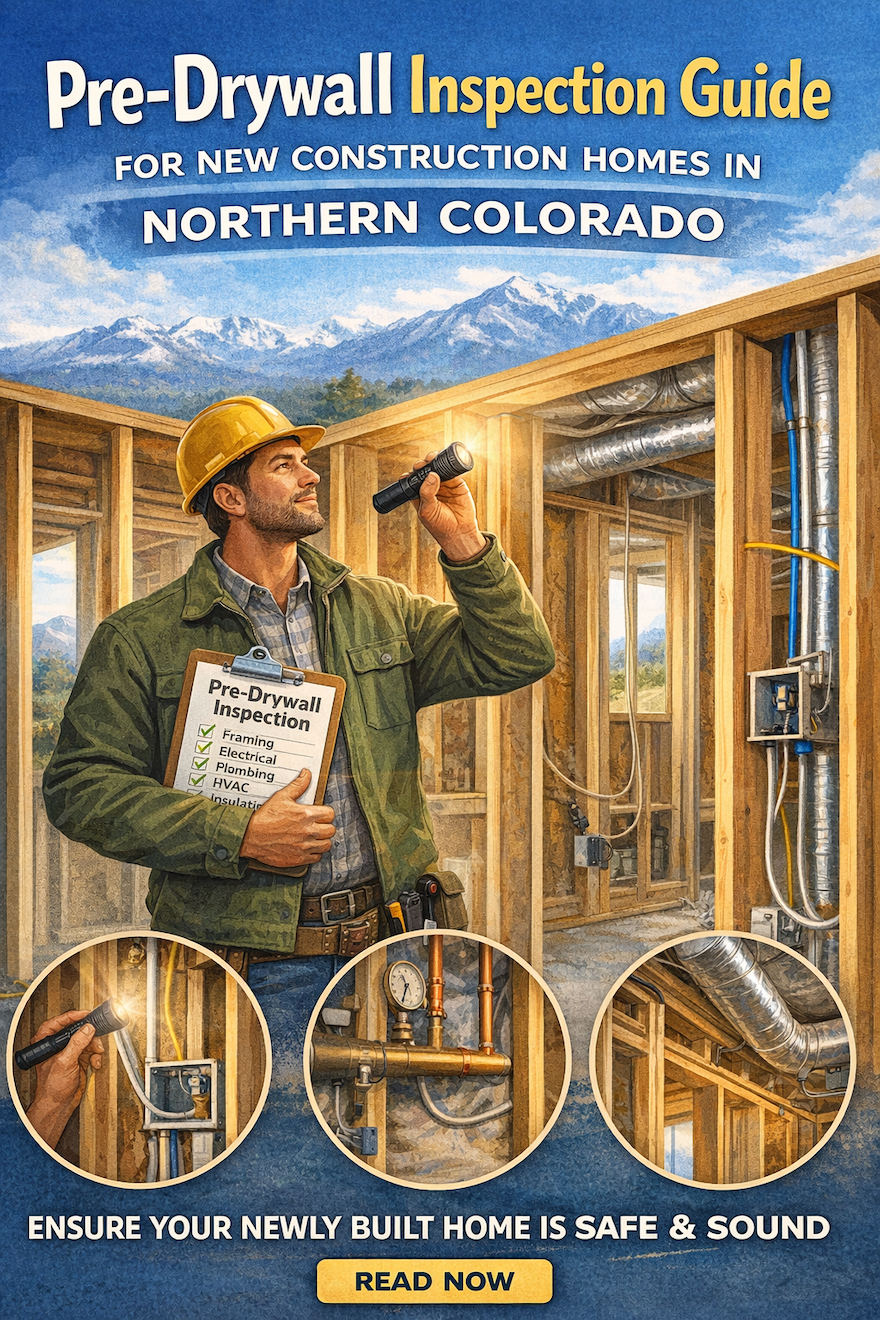
This inspection allows a professional home inspector to evaluate the home’s structure, electrical wiring, plumbing, framing, HVAC systems, and safety features while everything is still visible.
Once drywall goes up, many of these components become hidden behind walls.
For buyers building homes in Fort Collins, Windsor, Timnath, Severance, or Johnstown, this inspection can prevent thousands of dollars in future repairs and ensure the home was built correctly.
In this guide, we’ll cover:
- What a pre-drywall inspection is
- What inspectors look for
- When it happens in the building timeline
- Whether builders allow it
- Why it’s critical for Northern Colorado new construction buyers
Thinking about buying new construction?
Get expert guidance on builders, incentives, and contracts — no pressure.
What Is a Pre-Drywall Inspection?
A pre-drywall inspection (sometimes called a frame inspection) occurs after the home’s framing, plumbing, electrical, and HVAC systems are installed but before insulation and drywall are added.
At this stage of construction, inspectors can see the internal structure of the home.
This makes it the best time to identify construction issues that would otherwise be hidden once walls are finished.
Typical systems visible during a pre-drywall inspection include:
- Wall framing and roof structure
- Electrical wiring
- Plumbing lines
- HVAC ductwork
- Window installation
- Fire blocking
- Structural connectors and fasteners
For buyers purchasing Northern Colorado new construction, this inspection provides peace of mind that the home is being built according to modern construction standards.
When Does the Pre-Drywall Inspection Happen?
The pre-drywall stage occurs roughly midway through the building timeline.
Typical construction phases look like this:
-
Foundation and Concrete
The builder pours the foundation and installs footings. -
Framing
Walls, floors, and roof framing are constructed. -
Rough-In Systems
Contractors install:- Electrical wiring
- Plumbing pipes
- HVAC ductwork
- Gas lines
- Ventilation systems
-
Pre-Drywall Inspection
The home should be inspected before insulation and drywall installation. -
Insulation and Drywall
Walls are sealed and finished. -
Final Construction and Walkthrough
The home moves toward completion.
Because this stage can move quickly, buyers should stay in close contact with the builder.
Many builders allow only 24–72 hours to schedule an inspection before drywall installation begins.
Why Pre-Drywall Inspections Are Important
Many buyers assume new construction homes are perfect.
Unfortunately, construction mistakes happen more often than people realize.
Even reputable builders in Northern Colorado rely on large subcontractor teams, and issues can occur during fast build timelines.
A pre-drywall inspection helps identify:
- Structural concerns
- Installation mistakes
- Code compliance issues
- Safety hazards
Catching these issues early makes them much easier and cheaper to fix.
Once drywall goes up, repairs may require cutting open finished walls.
What Inspectors Look For During a Pre-Drywall Inspection
A professional home inspector reviews several structural and mechanical systems.
Framing Quality
Inspectors evaluate the structural framework of the home.
They look for:
- Properly spaced studs
- Secure wall connections
- Correct beam support
- Straight framing
They may also check:
- Roof truss connections
- Structural load paths
- Floor joist alignment
Proper framing ensures the home remains structurally stable for decades.
Electrical Wiring
Electrical systems must be installed safely and according to code.
Inspectors check:
- Proper wire routing
- Secure electrical boxes
- Stapled wiring
- Safe distances from framing edges
- Grounding systems
Common electrical mistakes discovered during pre-drywall inspections include:
- Loose wiring
- Missing protective plates
- Incorrect breaker sizing
These issues are far easier to fix before walls are closed.
Plumbing Systems
Plumbing rough-ins are fully visible at this stage.
Inspectors review:
- Water supply lines
- Drain pipes
- Vent stacks
- Pipe supports
- Leak risks
They may also confirm plumbing pipes are protected from nail punctures where they pass through studs.
HVAC Ductwork
Heating and cooling systems are critical in Northern Colorado’s climate, where temperatures vary dramatically.
Inspectors check:
- Duct routing
- Airflow design
- Proper sealing
- Insulation around ducts
Improper duct installation can lead to:
- Uneven heating
- High utility bills
- Poor indoor air quality
Window and Door Installation
Windows are inspected for:
- Proper flashing
- Correct installation
- Weather sealing
- Structural framing support
Poor window installation can lead to future moisture problems or energy loss.
Fire Blocking and Safety Systems
Modern building codes require fire blocking to prevent fire from spreading through wall cavities.
Inspectors verify that:
- Fire blocks are installed correctly
- Attic separation is proper
- Mechanical penetrations are sealed
These features are important for home safety and code compliance.
Common Problems Found During Pre-Drywall Inspections
Even well-managed projects can contain construction mistakes.
Some of the most common issues inspectors find include:
Misaligned Framing
Walls that are slightly out of square can lead to:
- Crooked drywall
- Cabinet installation problems
- Flooring issues
Missing Structural Fasteners
Homes rely on specialized connectors such as:
- Hurricane ties
- Structural brackets
- Anchor bolts
Missing connectors can weaken structural integrity.
Poorly Routed Wiring
Electrical wires should not be tightly bent or compressed.
Improper routing can cause overheating or future electrical hazards.
Plumbing Installed Incorrectly
Drain lines must slope correctly to allow proper water flow.
Incorrect slope can cause:
- Slow drainage
- Sewer gas issues
- Pipe clogs
HVAC Layout Problems
Improper duct placement can create rooms that are:
- Too hot
- Too cold
- Poorly ventilated
Do Builders Allow Pre-Drywall Inspections?
Most builders in Northern Colorado allow third-party inspections, but policies vary.
Production builders like:
- Lennar
- DR Horton
- Richmond American
- LGI Homes
Often allow inspections with prior approval and scheduling.
However, buyers should confirm this during the contract process.
Some builders instead offer a builder walkthrough, which is not the same as a professional inspection.
A licensed inspector works for the buyer, not the builder.
How Much Does a Pre-Drywall Inspection Cost?
In Northern Colorado, pre-drywall inspections typically cost:
- $300 – $600
Pricing depends on:
- Home size
- Inspector experience
- Location
- Inspection scope
Many inspectors offer bundle packages that include:
- Pre-drywall inspection
- Final inspection
- 11-month warranty inspection
This provides full coverage throughout the construction process.
How to Schedule a Pre-Drywall Inspection
Timing is critical.
Follow these steps:
-
Hire an Inspector Early
Find a certified inspector familiar with new construction homes. -
Ask the Builder for the Drywall Timeline
Builders typically notify buyers when the home reaches the pre-drywall stage. -
Schedule Immediately
Drywall can begin within days, so scheduling quickly is important.
Should You Attend the Inspection?
Yes, if possible.
Attending allows buyers to:
- Ask questions
- Understand how systems work
- Learn about the home’s construction
Many inspectors also provide detailed reports with photos and recommendations.
How Pre-Drywall Inspections Protect Northern Colorado Buyers
New construction homes in Windsor, Timnath, Severance, Fort Collins, and Johnstown are being built at a rapid pace.
Fast construction timelines increase the chances of:
- Missed details
- Subcontractor errors
- Quality control issues
A pre-drywall inspection helps ensure the home meets professional standards before finishing begins.
It’s one of the most effective ways to protect your investment when purchasing Northern Colorado new construction homes.
For a full overview of inspections during the building process, see our guide on new construction inspections.
FAQ: Pre-Drywall Inspections
Is a pre-drywall inspection necessary for new construction?
Yes. While builders perform their own inspections, a third-party inspector represents the buyer and can identify issues before walls are closed.
Can builders refuse a third-party inspection?
Some builders require scheduling approval, but most allow inspections as long as safety rules are followed.
Always confirm inspection rights in the purchase contract.
What happens if the inspector finds problems?
The inspector provides a report that buyers can share with the builder. Most reputable builders will correct issues before construction continues.
Do city inspectors already check the home?
Yes. Municipal inspections focus on minimum building code compliance, but private inspectors typically provide a more detailed evaluation.
What other inspections should new construction buyers get?
Most experts recommend three inspections:
- Pre-drywall inspection
- Final inspection before closing
- 11-month warranty inspection
These ensure the home is properly built at each stage.
Final Thoughts
A pre-drywall inspection is one of the most valuable steps when purchasing a Northern Colorado new construction home.
Because walls are still open, inspectors can identify structural, mechanical, and safety issues before they become hidden problems.
For buyers building homes in Fort Collins, Windsor, Timnath, Severance, or Johnstown, this inspection provides an extra layer of protection during one of the biggest purchases of your life.
When done at the right time, a pre-drywall inspection can prevent costly repairs, improve construction quality, and ensure your new home is built the right way from the start.
Related Reading
- New Construction Inspections Guide
- Hidden Costs of New Construction Homes
- Timeline of Building a New Construction Home in Northern Colorado