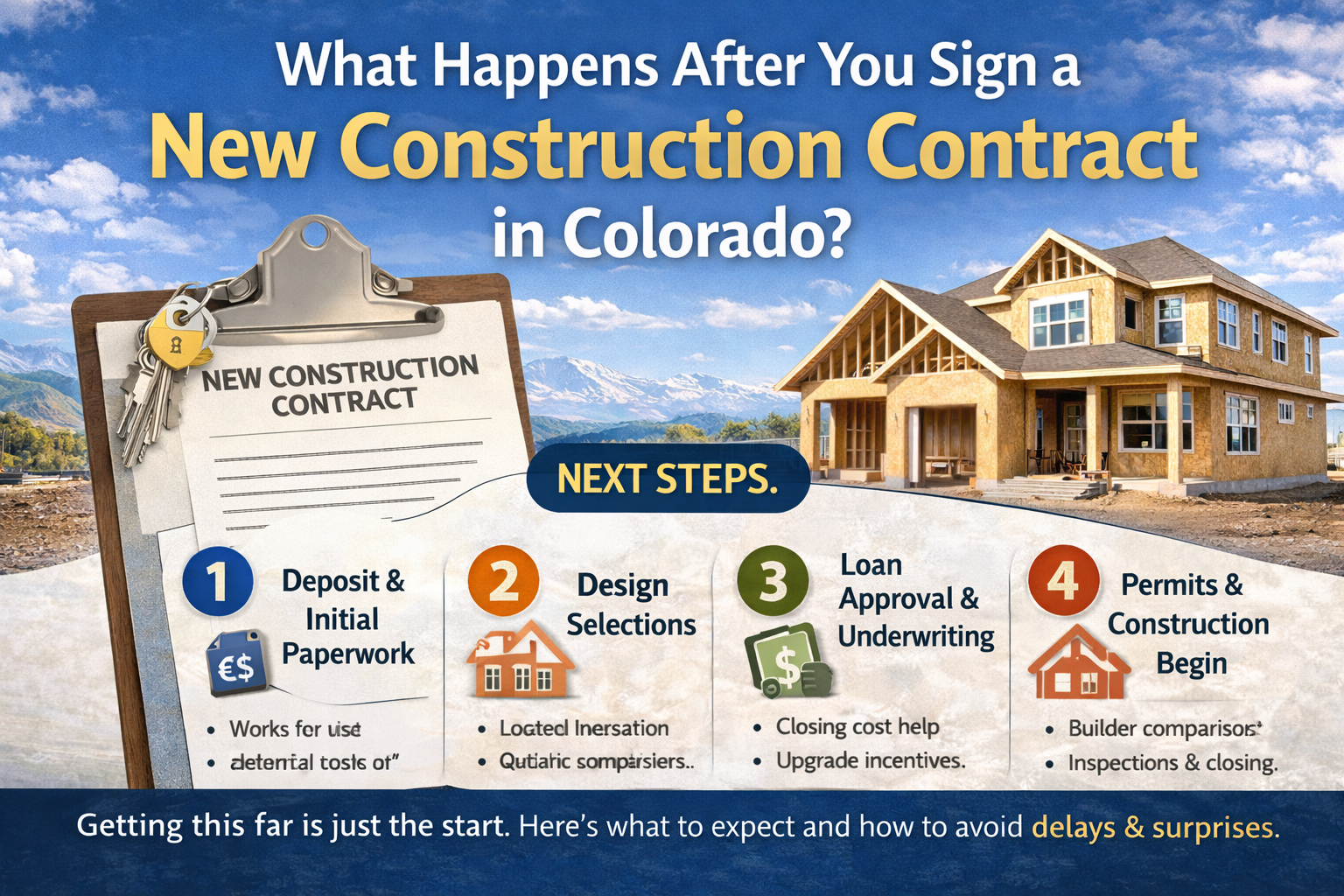
What Happens After You Sign a New Construction Contract in Colorado?
Signing a contract on a new construction home is a big milestone—but it’s really just the beginning of the process. Many buyers assume things are mostly done at this point, but in reality, several critical steps happen between contract and closing.
If you're wondering what happens after you sign a new construction contract in Colorado, this guide walks you through exactly what to expect—from design selections to final walkthrough—so you can stay ahead of the process and avoid surprises.
Thinking about buying new construction?
Get expert guidance on builders, incentives, and contracts — no pressure.
What Happens After You Sign a New Construction Contract in Colorado?
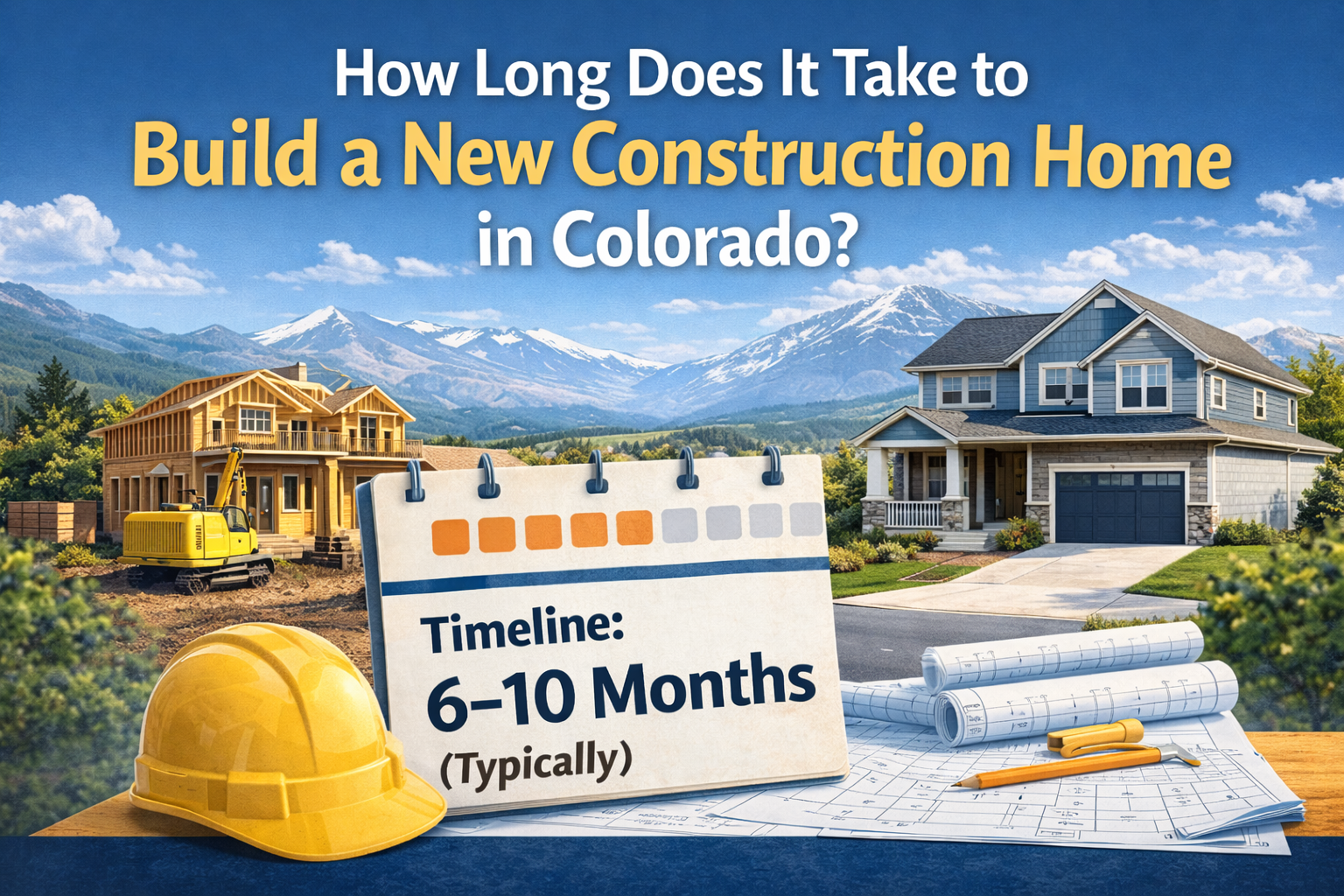
After signing, your home moves into a structured process that typically takes 6–10 months from start to finish. During this time, you’ll go through financing, design decisions, construction phases, and final closing.
Each step matters—and mistakes early on can impact your timeline, budget, and overall experience.
Step 1: Deposit and Initial Paperwork (First 1–2 Weeks)
Right after signing the contract, you’ll complete your initial financial commitments.
What Happens
- Earnest money deposit submitted
- Loan application finalized with lender
- Builder submits paperwork for permits
- Initial timeline is outlined
At this stage, your contract becomes fully active and the builder begins preparing your project.
Step 2: Design Center Selections (2–4 Weeks)
This is one of the most exciting—and financially impactful—steps.
What You’ll Choose
- Flooring, cabinets, countertops
- Paint colors and finishes
- Fixtures and hardware
- Structural upgrades (if allowed)
Important Considerations
- Upgrades can add $20K–$100K+
- Some selections must be finalized quickly
- Changes later in the process are difficult or impossible
This is where many buyers go over budget, so it’s important to plan ahead.
Step 3: Loan Approval and Underwriting (Ongoing)
While your home is being built, your financing moves through multiple stages.
What to Expect
- Full underwriting approval
- Documentation requests from your lender
- Credit and employment verification
Your lender may re-check your financials before closing, so stability is critical.
Step 4: Permits and Construction Start (1–2 Months After Contract)
Before building begins, the builder must secure permits.
Once Approved
- Site preparation begins
- Foundation is poured
- Construction timeline officially starts
Delays at this stage are common due to permitting or weather conditions.
Step 5: Construction Phase (4–6+ Months)
This is the longest phase of the process.
Major Milestones
- Framing (structure goes up)
- Mechanical systems (plumbing, electrical, HVAC)
- Insulation and drywall
- Interior finishes (flooring, cabinets, countertops)
You may have scheduled walkthroughs during this time, depending on the builder.
Step 6: Pre-Drywall and Progress Walkthroughs
Many builders offer checkpoints during construction.
Common Walkthroughs
- Pre-drywall inspection (before walls are closed)
- Mid-construction updates
- Final walkthrough
This is your chance to catch issues early—before they become expensive to fix.
Step 7: Final Inspections and Punch List (Last 2–4 Weeks)
As construction wraps up, your home goes through final quality checks.
What Happens
- Builder completes final work
- You create a “punch list” of items to fix
- Final cleaning and preparation
Before closing, you should schedule:
new construction inspections
Even brand-new homes can have defects.
Step 8: Final Loan Approval and Closing
Once construction is complete, you move toward closing.
Final Steps
- Final appraisal completed
- Loan cleared to close
- Closing documents signed
- Keys delivered
At this point, ownership officially transfers to you.
What Can Go Wrong (And How to Avoid It)
Even with a smooth process, delays and issues can happen.
Common Issues
- Construction delays due to weather
- Material shortages
- Financing changes
- Upgrade cost overruns
How to Stay on Track
- Avoid making large purchases during the build
- Keep your credit and employment stable
- Stay within your upgrade budget
- Work with experienced professionals
The Role of Your Builder vs Your Representation
Throughout this process, the builder is managing construction—but not necessarily your best interests.
This is why many buyers choose to:
- Work with a local expert
- Review builder quality
- Compare options upfront
Before choosing a builder, review:
compare builders in Northern Colorado
Timeline Summary
Here’s a simplified overview:
- Contract to design → 2–4 weeks
- Permits to construction start → 1–2 months
- Build time → 4–6+ months
- Final steps to closing → 2–4 weeks
Total timeline:
- 6–10 months on average
FAQ: What Happens After You Sign a New Construction Contract in Colorado
How soon does construction start after signing?
Typically within 30–60 days, depending on permits and builder scheduling.
Can I make changes after signing the contract?
Limited changes are allowed, usually during the design phase. Changes later can be costly or not permitted.
Will my loan be finalized before construction ends?
Your loan goes through approval early, but final approval happens right before closing.
Can delays happen?
Yes—weather, materials, and permits can all affect the timeline.
Do I need an inspection on a new home?
Yes. New homes can still have issues, so inspections are highly recommended.
Final Thoughts
So, what happens after you sign a new construction contract in Colorado?
You move into a structured—but complex—process that includes design decisions, financing, construction, and final closing.
The key to a smooth experience is preparation. Understanding each step helps you stay in control, avoid delays, and make better financial decisions along the way.
If you're planning to build, knowing what comes next can make the entire process far less stressful—and much more predictable.